Saturday, 20 August 2011
Amazing linux ubuntu 11.04 + extra effects
WATCH IT MY BUDDY.............. :-)
WOW IS NOTHING FOR IT.... UBUNTU ROCKS .

Thursday, 18 August 2011
Android Codenames
Updates for the open source Android mobile operating system have been developed under dessert-inspired codenames, with each new version arriving in alphabetical order with new enhancements and improvements to the Android SDK .
Here's a snapshot of the Android updates that have already been released as well as some that are currently in development:
Here's a snapshot of the Android updates that have already been released as well as some that are currently in development:
Wednesday, 17 August 2011
IRQ Numbers.
Prior to plug-and-play devices, users had to set IRQ values of devices manually when adding the device, such as a modem or printer, to a system. The following list of IRQ numbers specifies what each of the 16 IRQ lines are used for.
| IRQ 0 | System timer | This interrupt is reserved for the internal system timer. It is never available to peripherals or other devices. |
| IRQ 1 | Keyboard | This interrupt is reserved for the keyboard controller. Even on devices without a keyboard, this interrupt is exclusively for keyboard input. |
| IRQ 2 | Cascade interrupt for IRQs 8-15 | This interrupt cascades the second interrupt controller to the first. |
| IRQ 3 | Second serial port (COM2) | The interrupt for the second serial port and often the default interrupt for the fourth serial port (COM4). |
| IRQ 4 | First serial port (COM1) | This interrupt is normally used for the first serial port. On devices that do not use a PS/2 mouse, this interrupt is almost always used by the serial mouse. This is also the default interrupt for the third serial port (COM3). |
| IRQ 5 | Sound card | This interrupt is the first choice that most sound cards make when looking for an IRQ setting. |
| IRQ 6 | Floppy disk controller | This interrupt is reserved for the floppy disk controller. |
| IRQ 7 | First parallel port | This interrupt is normally reserved for the use of the printer. If a printer is not being used, this interrupt can be used for other devices that use parallel ports. |
| IRQ 8 | Real-time clock | This interrupt is reserved for the system's real-time clock timer and can not be used for any other purpose. |
| IRQ 9 | Open interrupt | This interrupt is typically left open on devices for the use of peripherals. |
| IRQ 10 | Open interrupt | This interrupt is typically left open on devices for the use of peripherals. |
| IRQ 11 | Open interrupt | This interrupt is typically left open on devices for the use of peripherals. |
| IRQ 12 | PS/2 mouse | This interrupt is reserved for the PS/2 mouse on machines that use one. If a PS/2 mouse is not used, the interrupt can be used for other peripherals, such as network card. |
| IRQ 13 | Floating point unit/coprocessor | This interrupt is reserved for the integrated floating point unit. It is never available to peripherals or other devices as it is used exclusively for internal signaling. |
| IRQ 14 | Primary IDE channel | This interrupt is reserved for use by the primary IDE controller. On systems that do not use IDE devices, the IRQ can be used for another purpose. |
| IRQ 15 | Secondary IDE channel | This interrupt is reserved for use by the secondary IDE controller. |
Five Reasons Classic Ethernet Switches Won't Support the Cloud
When a company starts looking at providing cloud services to its clients, or consuming cloud services itself, it often becomes quickly apparent that the network needs to be upgraded to support this new service delivery model.
“External and hybrid cloud models mean that computing resources are remote, and access/ communications with those workloads will have to traverse a wide area or Internet network link,” says Jim Frey Managing Research Director of analyst firm Enterprise Management Associates. “This introduces substantially greater latency (and bandwidth constraints) than are normal for traditional campus/data center-based computing.”
Before implementing cloud computing, therefore, it is critical to examine the strength of the network to make sure that any weak points are located and eliminated. This helps to ensure that users receive the same QoS they are used to when using local servers. In addition, IT has to be made aware that traditional Ethernet network architectures may not be adequate in achieving the desired service levels. Here are five reasons why this is the case.
To reduce the impact of this bottleneck, link aggregation groups (LAGs) permit multiple physical links to share the ISL. But this requires manually configuring all the ports in the LAG, a task that becomes increasingly complex as more switches are added.
Since they are more intelligent than their traditional counterparts, all ports on all switches within the fabric can share common configuration parameters. When VMs migrate from one location to another, for instance, ports don’t require reconfiguration. Further, they can scale much higher because a logical trunk is automatically formed when more than one connection is required instead of allowing a single connection between switches.
Ethernet fabric switches are more efficient because they use link state routing with multipath routes. This allows traffic to take the shortest path through the network, rather than following the hierarchical path imposed by STP. Finally, Ethernet fabrics are simpler to manage since configuration information is shared with all ports in the network.
By analyzing one’s current network and any proposed new cloud services, it will become clear whether the existing infrastructure will work.
“If you are going to Fibre Channel over Ethernet (FCoE) as part of a converged and cloud environment, you will want to invest in new technologies to take full advantage of those capabilities,” says Greg Schulz of the Server and StorageIO Group. “However, if your network and switches can handle the local as well as wide area traffic, cloud service access and security, they might be able to support cloud access and the question should be what upgrades are needed for wide area access and optimization. Ultimately, though, some network upgrades and enhancements will be in your future.”
“External and hybrid cloud models mean that computing resources are remote, and access/ communications with those workloads will have to traverse a wide area or Internet network link,” says Jim Frey Managing Research Director of analyst firm Enterprise Management Associates. “This introduces substantially greater latency (and bandwidth constraints) than are normal for traditional campus/data center-based computing.”
Before implementing cloud computing, therefore, it is critical to examine the strength of the network to make sure that any weak points are located and eliminated. This helps to ensure that users receive the same QoS they are used to when using local servers. In addition, IT has to be made aware that traditional Ethernet network architectures may not be adequate in achieving the desired service levels. Here are five reasons why this is the case.
1. Classic Ethernet Networks are Hierarchical
Ethernet typically relies on a hierarchy of three or more tiers. Moving traffic between different server racks, for example, requires transitioning up and down this logical tree. The important point here is that each step along the path adds to the total latency. To avoid bridge loops between different network segments, IEEE 802.1D Spanning Tree Protocol (STP) allows only one active path at a time between two switches. However, this leads to congestion on the Inter-Switch Link since the bandwidth is limited to that single link. There are, of course, variations of that STP protocol that seek to address this issue. Rapid Spanning Tree Protocol (RSTP) is a method defined in IEEE 802.1w that reduces the time it takes to respond to changes in network topology. Another approach is Multiple Spanning Tree Protocol (MSTP), IEEE 802.1s, which extends RSTP to include a separate spanning tree for each Virtual Local Area Network (VLAN) group and blocks all but one possible passage for that VLAN within the spanning tree.2. Classic Ethernet Networks are Unintelligent
Classic switches are designed to connect physical, not virtual, resources. Each port is individually configured with the QoS, security, VLAN traffic and other network policies required by that particular server. In a virtual world, however, VMs move from one box to another depending on traffic loads or maintenance requirements. Unless the port configuration follows the VM to its new physical location, the connection fails. What this means to IT is either manually reconfiguring the ports with each move, or implementing a more intelligent class of switches that have all the applicable policies available at all ports, and can utilize those policies that are applicable to the service that is connected at the time.3. Classic Ethernet Networks Don’t Scale
Since Classic Ethernet networks are designed to allow only a single connection between switches, this limits the amount of traffic they can carry. “The scalability of traditional Ethernet is problematic, especially if an organization assumes, as it nearly always will, that cloud infrastructures will grow,” says Charles King, Principal Analyst at Pund-IT, Inc. “That said, some vendors are delivering or proposing cloud solutions based on higher throughput 10Gb and 40Gb Ethernet.”To reduce the impact of this bottleneck, link aggregation groups (LAGs) permit multiple physical links to share the ISL. But this requires manually configuring all the ports in the LAG, a task that becomes increasingly complex as more switches are added.
4. Classic Ethernet Networks Are Inefficient
Due to the limitations of STP, only one link or LAG can be active at a time, lowering the utilization rate. Adding or removing a new link causes the entire network to pause while the network reconfigures a new loop-free tree. This process can take from a few seconds up to several minutes, disrupting traffic and sometimes causing server crashes.5. Classic Ethernet Networks Are Complex
With classic Ethernet networks, each port on each switch needs to be configured with the applicable VLANs, QoS, security, network policies and protocols. As servers are added, more switches are needed and they can’t share a common configuration.Switching to Fabric
To eliminate the various bottlenecks caused by traditional Ethernet architectures, switch vendors have begun to adopt fabric architecture into their Ethernet switches. This eliminates or mitigates each of the problems listed above. Fabric switches flatten the network, reducing latency by eliminating unnecessary steps and preventing bottlenecks that can occur at the ISL.Since they are more intelligent than their traditional counterparts, all ports on all switches within the fabric can share common configuration parameters. When VMs migrate from one location to another, for instance, ports don’t require reconfiguration. Further, they can scale much higher because a logical trunk is automatically formed when more than one connection is required instead of allowing a single connection between switches.
Ethernet fabric switches are more efficient because they use link state routing with multipath routes. This allows traffic to take the shortest path through the network, rather than following the hierarchical path imposed by STP. Finally, Ethernet fabrics are simpler to manage since configuration information is shared with all ports in the network.
Classic or Fabric?
When is a classic Ethernet network adequate and when should one change to an Ethernet fabric? It depends on the applications. Some applications require large amounts of raw throughput; transaction systems are sensitive to latency. “It comes back to what is the workload one is trying to project up into the cloud,” says Dan Kusnetzky, analyst and founder of the Kusnetzky Group. “Until we know more about the application and its requirements, it is hard to say whether or not a typical router will satisfy the requirements or not.”By analyzing one’s current network and any proposed new cloud services, it will become clear whether the existing infrastructure will work.
“If you are going to Fibre Channel over Ethernet (FCoE) as part of a converged and cloud environment, you will want to invest in new technologies to take full advantage of those capabilities,” says Greg Schulz of the Server and StorageIO Group. “However, if your network and switches can handle the local as well as wide area traffic, cloud service access and security, they might be able to support cloud access and the question should be what upgrades are needed for wide area access and optimization. Ultimately, though, some network upgrades and enhancements will be in your future.”
Thursday, 4 August 2011
Preview The New Firefox UI
Firefox 3.6 to Firefox 4 user-interface transition was something not everybody was comfortable with, but this has not stopped Mozilla for trying out new UI's which might get finalized when Firefox 7 or 8 gets released later this year. Screenshots of new Mozilla Firefox UI proposal after the jump.
Click To Enlarge 

Click To Enlarge 




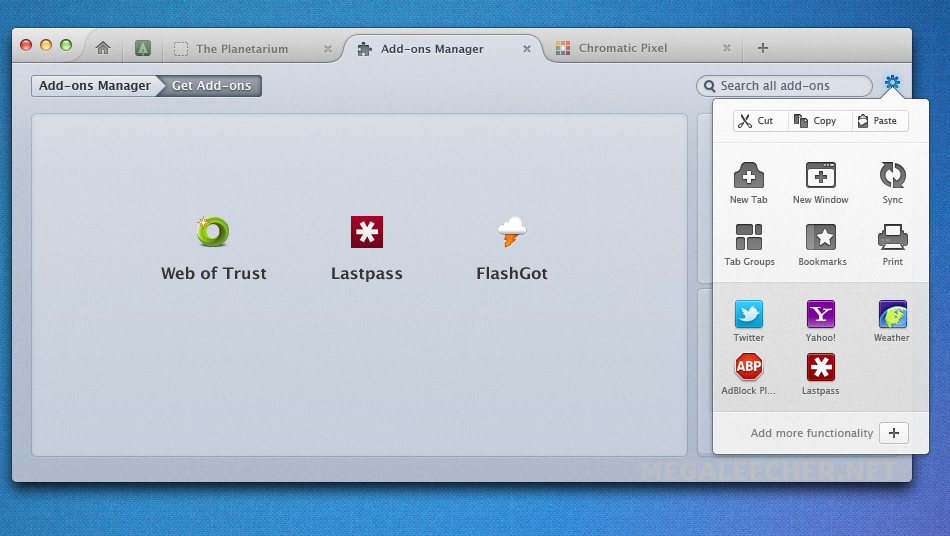
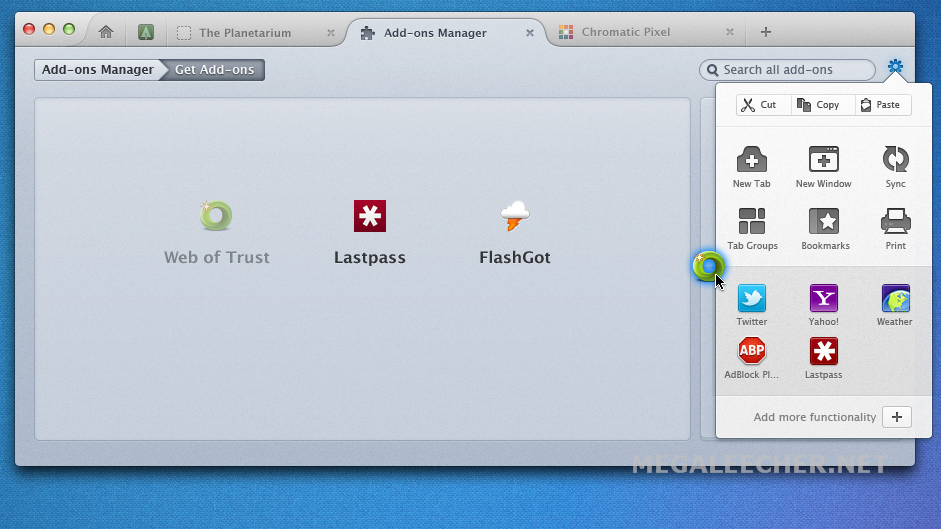

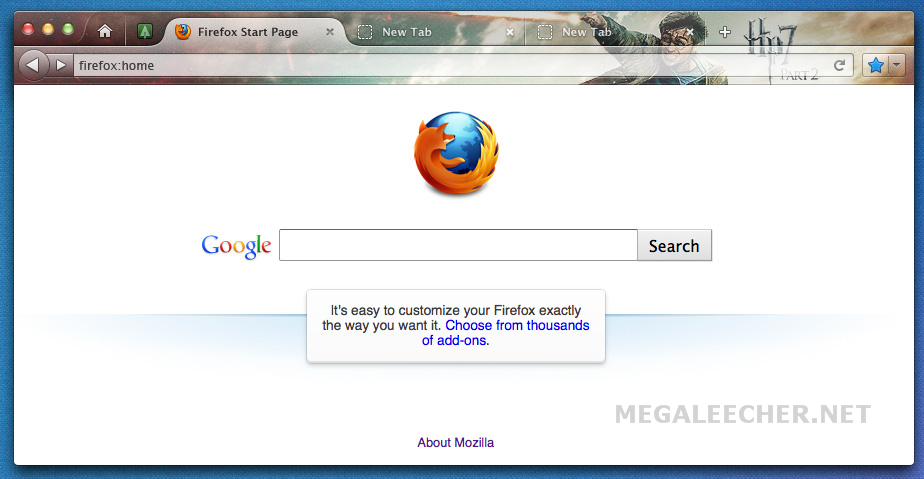
Dowbnload Latest Firefox UI Builds from links below, do keep in mind the UI changes shown above are yet not available in current builds but will eventually get pushed there :
Tuesday, 28 June 2011
TECHNOLOGY.
Researchers are experimenting with carbon nanotubes to phenomenally change the way semiconductor devices are made. At the same time, there are innovations to address immediate needs such as improving yield, decreasing time-to-market, reducing leakage power, thermal management in multi-die stacks, new layout requirements and so on......
GAMING.
For all the online game addicts, below are the 10 online gaming sites you might have never come across.
Grungi»: Play hundreds of free online games for boys and girls: free online games, girls games, flash games, racing games, mmorpg, 3d games, puzzle games and more!
OMGpop»: As it claims to be the bestest place for multi player games. This site has got cool interface and promises to be the best place to check in while you are bored. Do give it a try!
Heyzap»-Games for your site: Heyzap allows any website or blog to take the most exciting flash games and put them into their website. This results in the website/blog having increased traffic, user time of site and engagement. Publishers can use widgets, APIs or RSS feeds to connect up to over 12,000 games.
Whats your place-Virtual land owenrship»: With WYP, the entire world is for sale, and everyone can own his favorite parts of it. Virtual land ownership includes the right to exclusively showcase the place to the online audience (there is a profile to each place). The community environment fosters lively discussions and members sharing their emotions, rumors, and news about places.
We Game-show your game»: WeGame is a service that allows gamers to record video of what they do in PC games and instantly publish it online.he WeGame client is tightly integrated with the WeGame site, so all it takes is a simple click of your mouse and your video is online for gamers around the world to watch.
Mind 360-play smart»: Mind360 is profoundly committed to enhancing and maintaining people's mental fitness through a new cutting-edge online cognitive training platform. Mind360 highly engaging brain training games are designed to help strengthen key cognitive functions including Memory, Attention, Executive Functions, Thinking and Reasoning, and Visual Perception etc., and all in enjoyable ways.
Karoke Party game-free online karoke party game»: Sing karaoke online in your web browser. Practice your singing and increase your score. Challenge your friends in becoming the next karaoke champion. All you need is a microphone, built in or connected to your computer.
Sudokular»: Sudokular is a place where you can play Sudoku online, face up to the sudoku challenge, get listed in the hall of fame, play in different game modes on so on.
YOYO»-Create your own Games: Do you want to develop computer games without spending countless hours learning how to become a programmer? Then you've come to the right place. Game Maker allows you to make exciting computer games, without the need to write a single line of code
PickTastic»-show your sports knowledge: Picktastic brings the excitement of sports betting to casual and avid sports fans by challenging them to prove that they know their sports. Members of the site, aptly referred to as "Pickrs," pick which professional and collegiate teams will win for upcoming games, and score points based on their accuracy. These points are used to help boost their rankings against their friends and other Pickrs. Points can also be wagered against opposing Pickrs prior to a game beginning
Subscribe to:
Comments (Atom)